


The rector of the University of Telecommunication and Post on the challenges to Bulgarian higher education
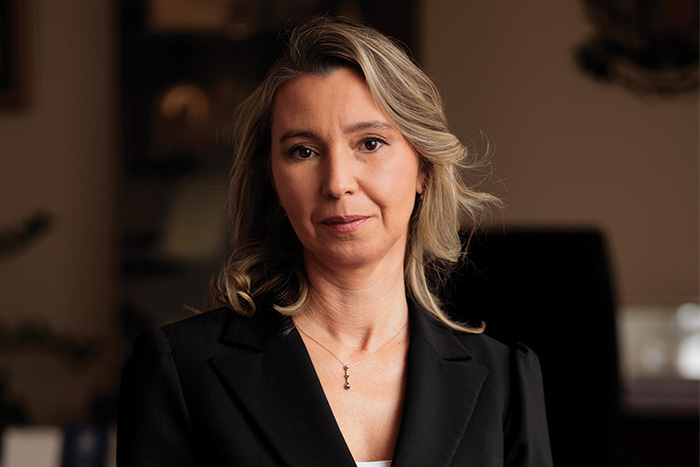
Professor Miglena Temelkova, PhD, is one of the visionaries in Bulgarian education today. She has graduated in finances and law, and has trained in leadership at Georgetown University in Washington. When she became the rector of Bulgaria's oldest professional university, the University of Telecommunications and Post, in 2019, she became Bulgaria's youngest woman at such a position. Her active stance and visionary policies were immediately felt in the UTP. The university is now in the frontlines of practically oriented, technology and partnerships driven higher education institutions in Bulgaria.
Modern education is very dynamic. What does Bulgarian higher education look like on the global background?
Modern education has to create professionals fit for the current economy. To achieve this, the business should be a stable presence in the educational process. In Bulgaria many universities provide practically oriented education that helps graduates to easily get employed in some of the largest technological and industrial companies in Bulgaria and the world. Universities dedicated to pure science focus on fundamental scientific research and education in fields such as social studies and humanities, technical sciences, chemistry, physics, and medicine. This diversity is specific to Bulgarian higher education.
For example, at the University of Telecommunications and Post teach experts from leading communication and IT companies. These organisations also provide our students with scholarships and training in a real business environment, and every year invest in UTP over half a million leva in labs, software, technology, and innovations. At the UTP, education and business go hand in hand, as a result our graduates quickly find jobs with starting salaries exceeding 3,000 leva.
In which aspects of Bulgarian higher education is still lagging behind current global trends? How can we bridge the gap?
People complain that no Bulgarian university is in the world's top 100. However, we have to be realistic. Bulgaria is a small and unknown country, and no policies have been set in motion to make it more recognisable on the global educational market.
Second, in 2024, just 0.6% of the Bulgarian GDP will be spent for higher education. In 2023 the funding was 0.76% of the GDP. You need funding to be competitive on a global level.
Third, applied science universities receive laughable funding for research. When you do not make science, you are not in the respected international science publications.
Fourth, the future belongs to interdisciplinary education. In Bulgaria, it takes a year and a half to accredit an interdisciplinary programme. These programmes are very popular and have the biggest added value for the economy. Hence, the bureaucratic procedures should be reformed.
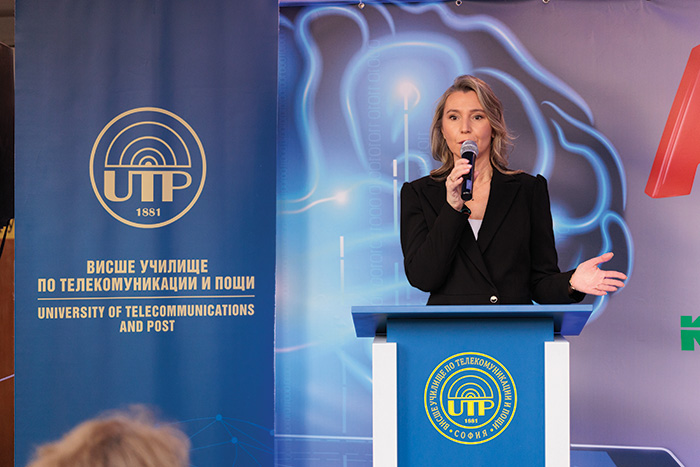
And still, Bulgarian universities offer rather good educational products. The problem is that they are practically locked in their territory.
To sum it up – Bulgarian higher education is not lagging behind global trends. It has integrated them, but remains unnoticed on the world map of education.
Introducing an institution with long traditions, like the UTP, on the global market is a demanding task. What is the most important thing that you want to achieve?
Our educational focus is unique and our programmes are without a paralel in Bulgaria. About 50% of them are interdisciplinary; we are practically preparing the engineers of the future. On this foundation we also make our first steps on the international market. According to Bulgaria's university rating system, the UTP is first in the number of attracted foreign students in communications and computer technology programmes. This means that we are recognisable abroad in this field. In the past three years, the UTP has witnessed a steady growth in enrolled students – an achievement on the background of the ongoing demographic catastrophe in Bulgaria. This is possible thanks to our understanding that unique programmes and the connection with the real business guarantee not only the quality of our educational service, but also that it is in high demand.
How did the image of UTP transform in the past decade and how do you see it after 10 years?
Our university, and all Bulgarian universities, migrated from the analogue to the digital world. Probably, soon all universities will have to migrate from the digital to the intercontinental, and even to interplanetary education?
UTP has always strived to reach what is beyond the visible on the horizon. Its technological profile means that after 10 years we should have reached this line, and look farther.

As a woman and one of Bulgaria's youngest rectors, what motivates you in this position? What is the most challenging thing that you have to deal with?
I was motivated by my colleagues who trusted me. And I motivated them with my vision about the university's future development. The vision for positive change always motivates people and builds trust. When you turn your plans into a reality, people see that this trust was deserved and get motivated for new, even bolder ideas.
The greatest challenge that everyone in Bulgarian higher education faces is to keep and upgrade the authenticity, autonomy and competitiveness of the Bulgarian model for higher education.
As a university professor and professional, are you afraid of the growing role of AI?
No. Fear achieves nothing. Artificial intelligence is the result of the efforts of natural intelligence. Still, natural intelligence is the best. We, at UTP, apply this approach in our latest programme, Digital Entrepreneurship and AI.
Our fears of AI need to be proved unjustified by proper regulation and ethical standards imposed by the policy makers. However, it is up to us, too, to insist on the application of specific policies in this field. Because eventually the artificial and the natural intellect will become competitors.
Sofia, 1 Academician Stefan Mladenov St
-
COMMENTING RULES
Commenting on www.vagabond.bg
Vagabond Media Ltd requires you to submit a valid email to comment on www.vagabond.bg to secure that you are not a bot or a spammer. Learn more on how the company manages your personal information on our Privacy Policy. By filling the comment form you declare that you will not use www.vagabond.bg for the purpose of violating the laws of the Republic of Bulgaria. When commenting on www.vagabond.bg please observe some simple rules. You must avoid sexually explicit language and racist, vulgar, religiously intolerant or obscene comments aiming to insult Vagabond Media Ltd, other companies, countries, nationalities, confessions or authors of postings and/or other comments. Do not post spam. Write in English. Unsolicited commercial messages, obscene postings and personal attacks will be removed without notice. The comments will be moderated and may take some time to appear on www.vagabond.bg.


Add new comment