


The American University in Bulgaria is leading the way

One of the clearest signs that higher education is changing can be found in the classroom itself. Professors are looking beyond polished writing to understand how students reason, question, and connect ideas, because today, a flawless essay can easily be generated by AI in seconds.
Students too are beginning to reject AI-generated feedback from professors, as it feels generic and lacking emotion. They want to be challenged by another mind they revere.
This speaks to the very essence of a university: an intellectually stimulating environment at the heart of which is human connection. More than two thousand years ago, Socrates built his philosophy on the belief that education begins not with answers, but with questions.
"The more technology transforms the world around us, the more important universities become," says Dr. J.D. Mininger, President of the American University in Bulgaria. "Our role has never been simply to transfer knowledge, but to cultivate people who can ask better questions, adapt to change, and shape the future with wisdom and integrity."
From scarcity to abundance of information
For centuries, universities were among society's primary gatekeepers of knowledge. Today, the supermachine called AI can retrieve, assemble, and generate information accumulated over thousands of years within seconds. Information is no longer scarce; it is abundant.
The question, then, is no longer how much information students can access, but what they choose to do with it. In "The Idea of a University", John Henry Newman argued that the purpose of higher education was never merely to transmit information, but to cultivate an intellect capable of making connections and seeking truth. Artificial intelligence has made this more visible.
Educational models such as the liberal arts tradition at the American University in Bulgaria exemplify this shift. As the university celebrates its 35th anniversary, its model feels more relevant than ever. For three and a half decades, AUBG has nurtured four key skills, known as "the 4Cs", through every aspect of the educational experience. Critical thinking, communication, collaboration, and creativity become the blueprint for how we learn and later how we work and lead.

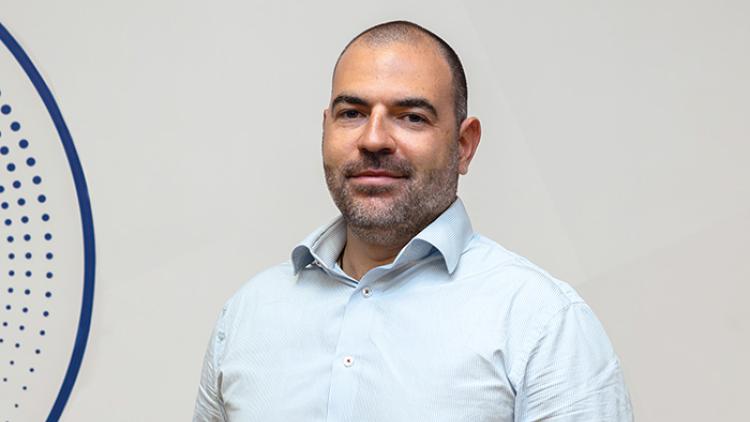
Dr. J.D. Mininger, President of the AUBG
"Jobs, markets, and even reality are being innovated in front of our eyes, often in very short spans of time," said Dr. J.D. Mininger. "This uncertainty hints that whatever you have trained for in a university in a narrow way may be inexorably altered just a couple of years later by AI or simply just by the changing nature of societal values and priorities."
From memorization to creativity and free thinking
What then happens in the classroom of the new era? Absorbing knowledge and reproducing it faithfully was designed for a world where error-free performance was rewarded.
At future-oriented universities such as AUBG, learning extends far beyond lectures and examinations. Students debate ideas with classmates from more than 40 countries, work on interdisciplinary group projects, and tackle real-world challenges alongside professors with extensive professional experience. They are encouraged to question the status quo and explore different perspectives with curiosity and respect.
Professors as mentors and intellectual partners
If anyone believes AI can replace a professor, they misunderstand what great professors actually do. Their role today is shifting away from simply delivering information and towards mentoring, challenging, and inspiring students. At AUBG, professors know their students by name and help them discover not simply what they think, but how they think.
Universities bring together ancient knowledge preserved through centuries of scholarship with the experience of educators who continue to engage with research and innovation. At AUBG, you will meet professors who make students resilient to the world's changes, something that cannot be found in any outdated textbook.
A new kind of leader
Universities should not prepare students merely to become diligent employees or authoritative bosses. They should prepare them to become leaders in their field with an entrepreneurial mindset, regardless of their profession or position. Leadership is about leading with integrity, making thoughtful decisions, taking initiative, and having a positive impact for others.
Like critical thinking, it is developed through practical experience, conversations with inspiring mentors, and collaboration with peers. At AUBG, students practise leadership every day, whether by being part of a student club, developing a start-up through the Elevate Accelerator, or organising events.
AI as a collaborator
None of this university experience excludes artificial intelligence. Quite the opposite. Many professors no longer prohibit AI altogether. Instead, they encourage students to use it transparently and responsibly. Artificial intelligence will undoubtedly become an integral companion in the workplace, and learning how to use it at the university level will prepare students for that reality.
However, institutional AI policies should not come from a top-down approach. For example, through the AI Aware Universities project at AUBG, carried out together with five European partner universities, all faculty, staff, and students collaborated to develop an AI policy that serves everyone.
The role of a future-oriented university is therefore to teach students how to think. If universities remain tied to yesterday's model of teaching and learning, they will struggle to prepare students for the pace at which tomorrow's world is unfolding.
-
COMMENTING RULES
Commenting on www.vagabond.bg
Vagabond Media Ltd requires you to submit a valid email to comment on www.vagabond.bg to secure that you are not a bot or a spammer. Learn more on how the company manages your personal information on our Privacy Policy. By filling the comment form you declare that you will not use www.vagabond.bg for the purpose of violating the laws of the Republic of Bulgaria. When commenting on www.vagabond.bg please observe some simple rules. You must avoid sexually explicit language and racist, vulgar, religiously intolerant or obscene comments aiming to insult Vagabond Media Ltd, other companies, countries, nationalities, confessions or authors of postings and/or other comments. Do not post spam. Write in English. Unsolicited commercial messages, obscene postings and personal attacks will be removed without notice. The comments will be moderated and may take some time to appear on www.vagabond.bg.











Add new comment